
The Squat: The First Movement Every Body Should Own
Movement Library · Post 1 of 5
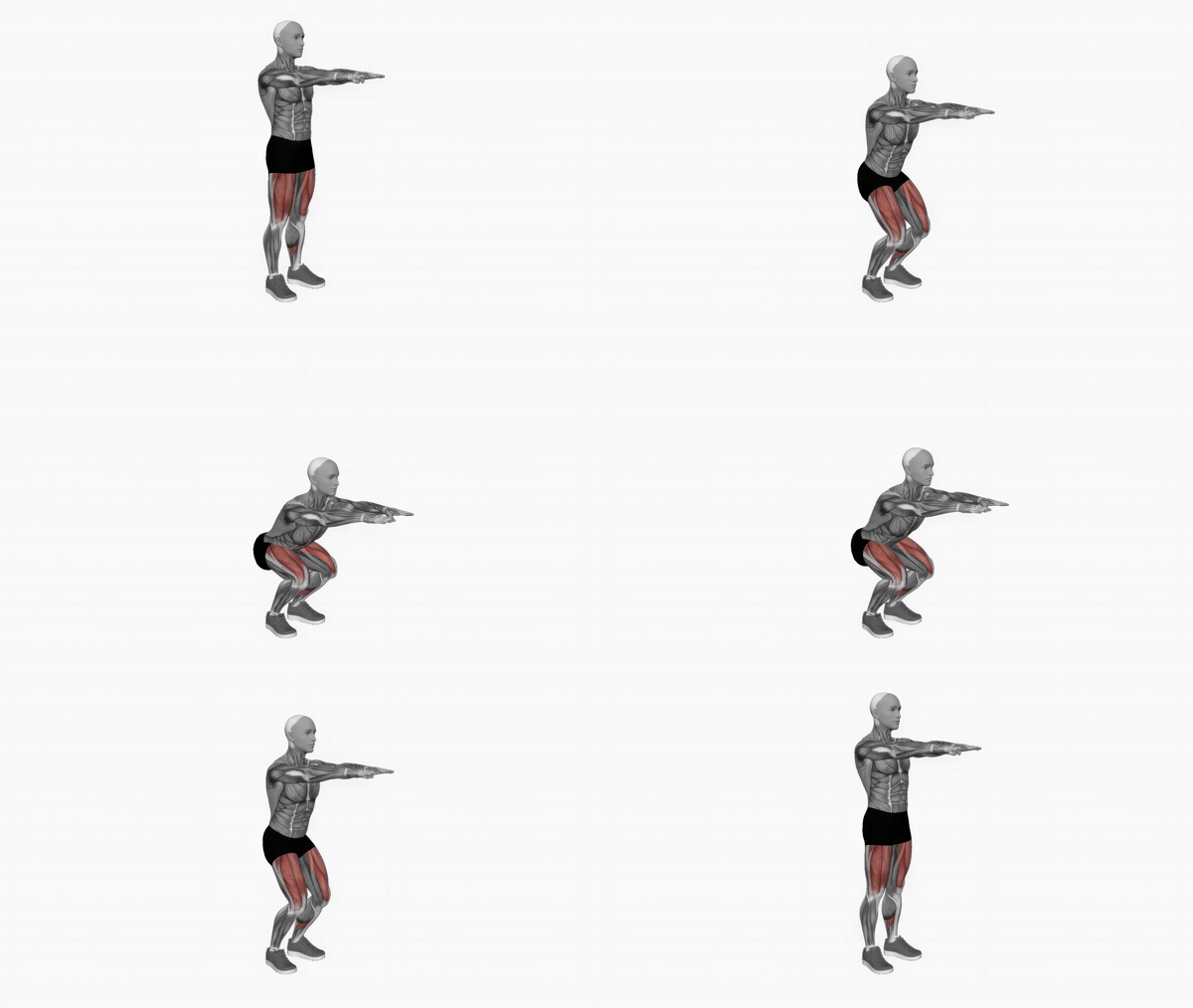
Bodyweight squat demonstration showing the muscles worked
The squat is one movement your body has been doing since before you could walk. Strong, durable people master patterns — and the squat is the one your body has been doing since before you could walk. Sitting down and standing back up is a movement you'll perform thousands of times this year without thinking about it. The only question is whether you own it, or whether it's slowly getting harder.
This is the first of five posts on the movements everybody should own, at any age. We start with the squat because everything else builds on it.
What it is
A squat is simply lowering your hips and standing back up — your hips and knees bending together while your torso stays tall. You don't need a barbell to train it. The goblet squat (holding a single weight at your chest), the box squat (sitting back to a bench and standing), and the plain bodyweight squat are where almost everyone should start.
Why it matters
The squat is how you get out of a chair, up off the floor, and up a flight of stairs — for the rest of your life. It trains your quads, your glutes, and your entire midsection in one movement. Lose it, and daily life quietly shrinks: lower chairs become a problem, then curbs, then the floor. Keep it, and you hold onto your independence decade after decade. There's no exercise with a better return on the time you put in.
How to do it well
Stand with your feet about shoulder-width apart, toes turned out slightly. Take a breath, brace your midsection, and sit down between your hips — imagine lowering into a chair that's just behind you. Keep your chest tall and let your knees track out over your toes, not caving inward. Go as low as you can while keeping that tall chest, then drive the floor away to stand back up.
The cue that fixes most squats: control the way down. Don't just fall into the bottom and bounce out of it. Own every inch, both directions.
The most common mistake
Two things go wrong for most people: the knees cave inward, or the chest drops toward the floor as they descend. Both are usually a sign you're going heavier or lower than you can currently control. Fix it by slowing down, screwing your feet into the ground to keep the knees tracking out, and only adding depth or load once the pattern holds together clean.
Where to start
If getting to a full-depth squat feels rough right now, that's information, not failure — and it's exactly what a good starting point is built around. Sit back to a box or a chair, use a support to hold onto, or hold a light weight at your chest to counterbalance. The right version for your body depends on how you actually move today.
A Movement & Strength Assessment finds your real starting point, then builds the program from there — no guessing, no generic template. Book yours at forgestrengthlab.as.me.
Want all five patterns in one place? Grab the free guide — The 5 Movements Every Body Should Own — a free, instant download.
