
The Push: Upper-Body Strength for Real Life
Movement Library · Post 3 of 5
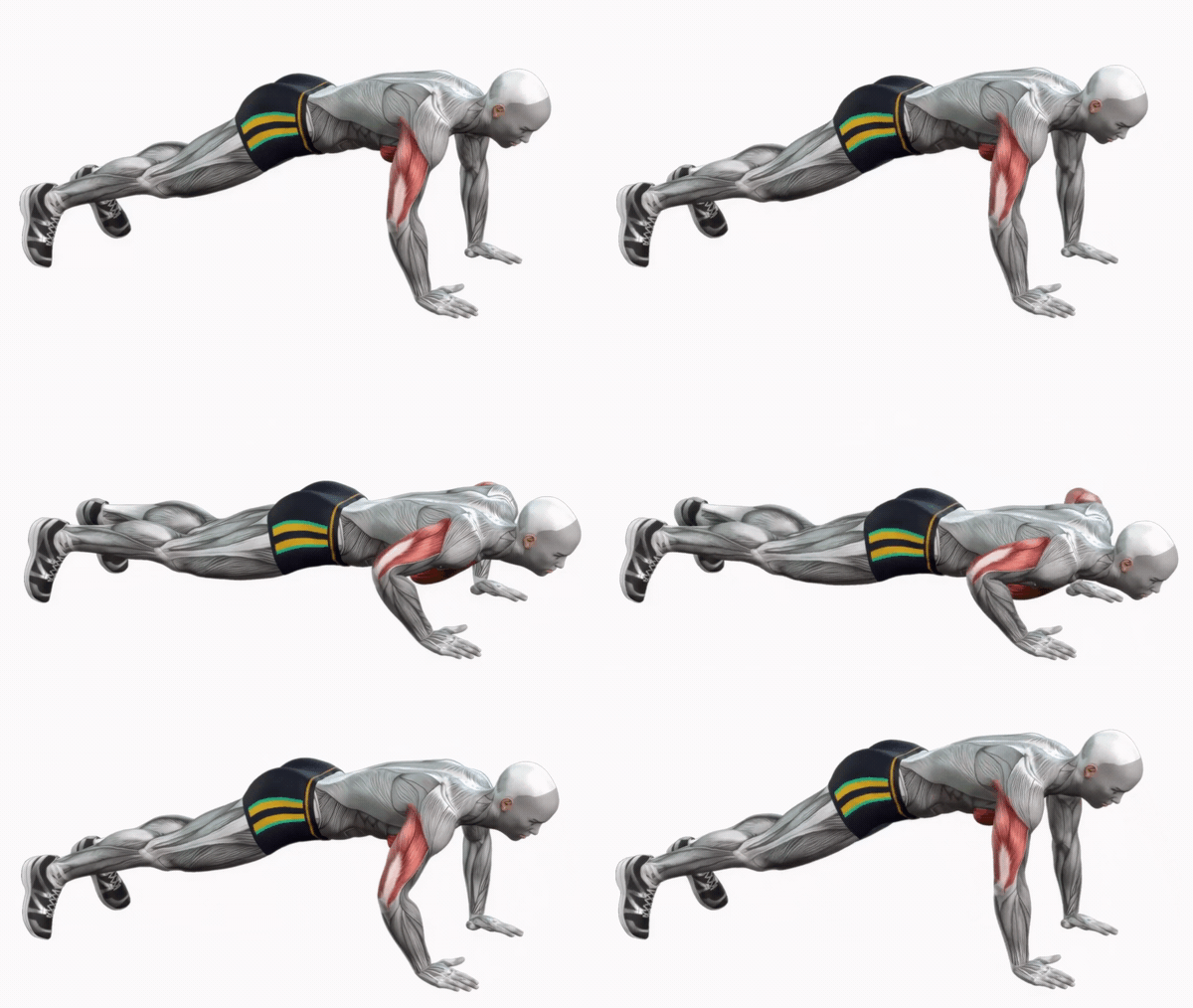
Push demonstration showing the muscles worked
Every time you close a heavy door, push a mower, or press yourself up off the floor, you're doing a push. It's the movement that keeps your upper body strong and useful — not just for the gym, but for the hundred small moments in a day that quietly ask something of you.
This is the third of five posts on the movements every body should own, at any age. We've covered the squat and the hinge; today it's the push.
A push is moving weight away from you. It comes in two directions: horizontal — a push-up, a bench press, a chest press machine — and vertical, pressing something up overhead. Both are pushes, and most people should own a comfortable version of each.
Why it matters
This is your upper-body strength for daily life: pushing a door open, guiding a cart, catching yourself, or getting up off the ground when no one's there to help. It builds your chest, shoulders, and triceps — and it keeps your upper body capable and independent as you age. Losing pushing strength is one of the quiet ways daily tasks start to feel heavier than they used to.
How to do it well
Whether you're pushing away from you or up overhead, start by setting your shoulder blades down and back — think "proud chest, shoulders away from your ears." Brace your midsection so your whole body stays stiff and connected, then press in a straight, controlled line and return under control. The power comes from a stable base, not from heaving the weight.
The cue that cleans up most pushes: shoulders down, not up. If your shoulders creep toward your ears as it gets heavy, you've lost the setup.
The most common mistake
The big one is shrugging the shoulders up into the load — letting them ride up toward your ears as you press. It steals power and puts the strain in the wrong place. Keep your shoulders set down and back, and let your elbows track naturally (not flared out wide, not pinned in tight). If you can't keep that position, the weight's too heavy — scale it back and own the pattern first.
Where to start
You don't need a bench or a barbell to train the push well. A push-up against a wall, then a countertop, then the floor is a full progression on its own — and an overhead press with light dumbbells covers the vertical side. The right starting point depends on your shoulders, your history, and how you actually move today.
A Movement & Strength Assessment finds your real starting point, then builds the program from there — no guessing, no generic template. Book yours at forgestrengthlab.as.me.
Want all five patterns in one place? Grab the free guide — The 5 Movements Every Body Should Own — a free, instant download.
